
Call of Duty Mobile: How Vulkan Made 60 FPS on Android a Reality
Back in 2019, I sat up when I heard Call of Duty Mobile was targeting 57 to 60 fps on Android. In 2026, that might sound ordinary—flagship phones chase 120 Hz—but back then it felt like someone promising console-grade smoothness in my pocket. The news came from Unite Copenhagen 2019, where Samsung Electronics engineer Jungwoo Kim and gamedev engineer Anton Syniavskyi walked through the journey of bringing Activision's FPS series to mobile. They didn't just hope for the best. They leaned on Vulkan, the Khronos graphics standard, and that choice is still shaping how the game feels today.
Vulkan: The Quiet Stagehand
Vulkan, if you're not a graphics nerd, is basically a modern API that knows how to talk to mobile and streaming platforms without wasting breath. Pocketgamer.biz reported that features like a single scratch buffer, threaded present, direct buffer access, and render pass load/store all contributed to adaptive performance. I love that phrase: adaptive performance. It sounds like the game is reading the room. When your phone is cool and ready, it stretches its legs. When things get toasty, it dials back gracefully instead of throwing a tantrum. That's the difference between a game that runs and a game that breathes.

What Launched in October 2019
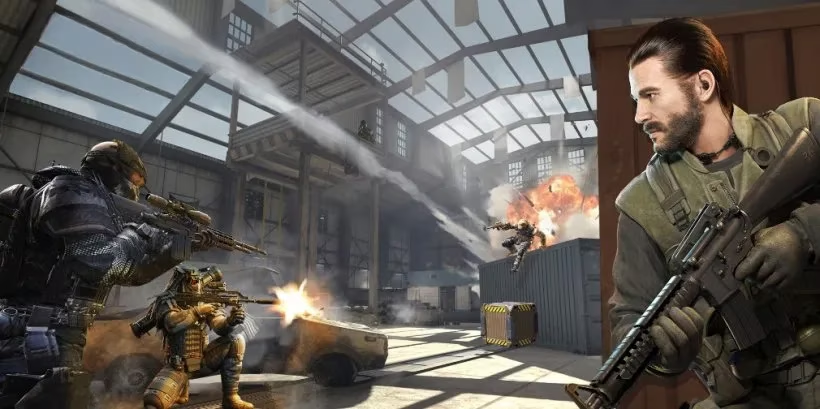
Call of Duty Mobile launched on iOS and Android on Tuesday, October 1st, 2019. I remember the lineup: competitive multiplayer modes like Team Deathmatch, Search & Destroy, and Gun Game, plus a 100-player battle royale. It pulled maps and weapons from across the series' history, from Black Ops to Modern Warfare. And the characters? John "Soap" MacTavish, Simon "Ghost" Riley, and Alec "Remember the Numbers" Mason all showed up. For longtime fans, that was a nostalgia bomb with a detonator labeled mobile.
| Launch feature | What it offered |
|---|---|
| Multiplayer modes | TDM, S&D, Gun Game, and more |
| Battle Royale | 100 players across land, sea, and air |
| Operators | Unique skills and scorestreaks |
| Maps and weapons | Pulled from Black Ops to Modern Warfare |
| Characters | Soap, Ghost, Mason, and other favourites |
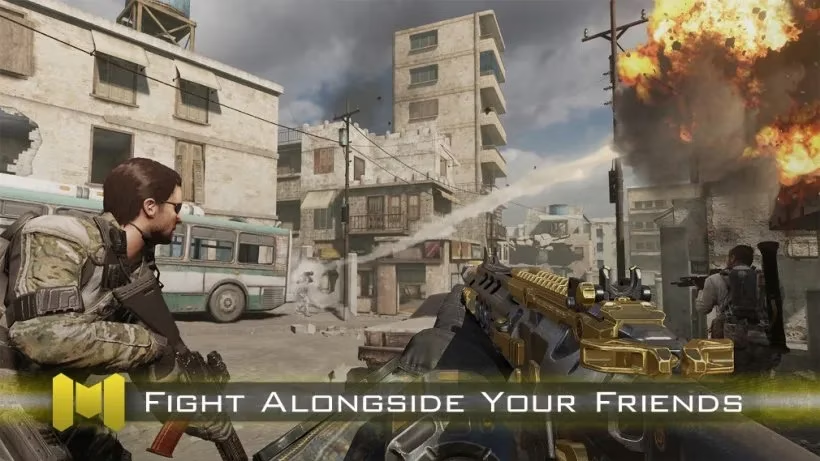
The core FPS action felt reminiscent of earlier boots-on-the-ground COD games. You unlocked Operators, each with their own skills and scorestreaks. The battle royale map was a patchwork of fan-favourite locales, and matches played out across land, sea, and air. That variety kept me coming back. One match I'm creeping through a familiar street, the next I'm piloting something across water, wondering how I ended up here. And that smoothness? It changes everything.
Why It Still Matters in 2026
Now, in 2026, Call of Duty Mobile is a different beast. It has seasons, events, and a community that refuses to slow down. But the foundation from 2019 still matters. That Vulkan-powered target of 57 to 60 fps on Android was no small feat. It meant the game could compete for attention with console and PC shooters without asking players to squint at a slideshow. Mobile esports grew because the frame rate held steady. Content creators clipped fast-paced plays because the controls felt responsive. And regular players like me could jump in for a match without feeling like we were fighting the phone.
Honestly, I think the industry learned something from this. Mobile isn't just a compromise platform. With the right API and engineering, it can be a first-class home for shooters. Vulkan didn't get a victory screen, but it deserves one. It's the quiet stagehand that makes the actors look good.
Of course, pre-registration is ancient history now. The game has been live for years. If you're new, you can still download it, and if you're returning, the muscle memory comes back fast. Just don't expect the 2019 meta to greet you. The game has evolved, but the core loop—aim, shoot, unlock, repeat—still has teeth.
Would I recommend it in 2026? You bet. Especially if you have an Android device that supports Vulkan well. The difference between a stuttery match and a smooth one is huge. And when a game respects your time and your hardware, it's easier to respect it back.
Looking back, Unite Copenhagen 2019 wasn't just a tech talk. It was a promise: Call of Duty Mobile would feel fast, fluid, and familiar. Years later, that promise still holds up. And that's pretty wild when you think about how many mobile shooters have come and gone.
Key findings are referenced from OpenCritic, and they help frame why Call of Duty: Mobile’s early push for a near-locked 57–60 fps on Android mattered beyond bragging rights—consistent performance directly influences how reviewers and players perceive responsiveness, competitive viability, and long-session stability. In practice, that Vulkan-driven “adaptive performance” approach described in the 2019 developer talk aligns with what people tend to reward in shooter coverage: low-latency aim feel, fewer hitches during heavy effects, and a steadier baseline that keeps fast multiplayer readable even as the game expands with seasons and new content.
Comments