
Garena COD Mobile Zombie Mode Test Server Steps and Early Access Guide
There was a moment in Call of Duty Mobile history when nearly every squad chat, forum post, and leak discussion revolved around one thing: zombies. Players had been asking for a dedicated undead mode since launch, and Garena’s announcement of a limited test server felt like an early holiday gift. Looking back from 2026, that test server run remains a fun example of how mobile shooters can build hype through limited access and a clear set of instructions.
Why was there so much hype? For starters, zombie modes have always been a fan-favorite part of Call of Duty’s identity. The idea of surviving waves, boarding windows, and unlocking mystery boxes translates surprisingly well to mobile. Before the mode was officially polished and rolled out more broadly, leaks suggested what it might look like, which only made players more curious. Would it feel like classic round-based zombies, or would it be a simplified mobile version? Those questions kept the community buzzing.
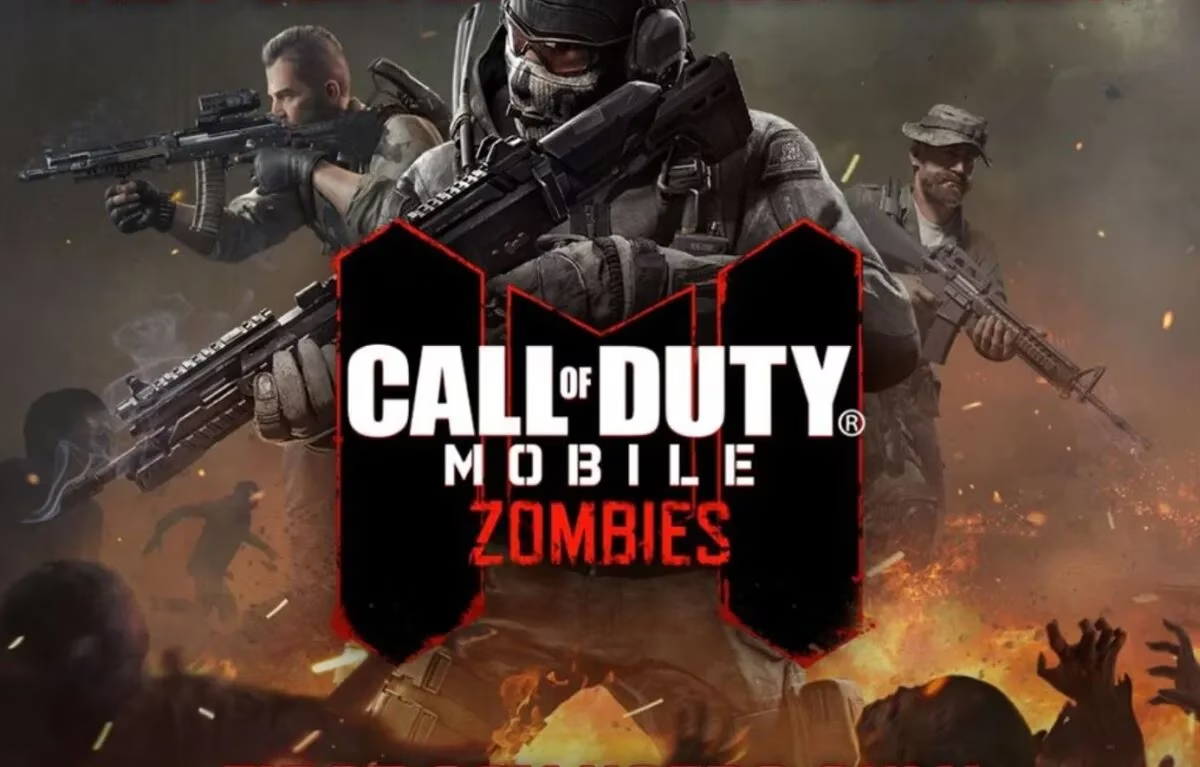
The test server details were simple but strict. Garena opened access to the first 20,000 players who registered. That may sound like a big number, but for a game with millions of active players, 20,000 spots disappeared fast. It was also Android-only at the time, with no mention of an iOS build. That meant iPhone players had to sit back and watch clips, which only increased demand for an eventual full release.
So, how did someone actually get in? The process was not complicated, but players had to act quickly. First, they needed to download the Call of Duty Mobile APK file for the test build. Next, they installed the APK and opened the game. After that, the in-game mailbox contained rewards that needed to be claimed. Finally, they were set to jump into Zombie mode. The mailbox step was important because some players skipped it and wondered why things were not unlocking properly.
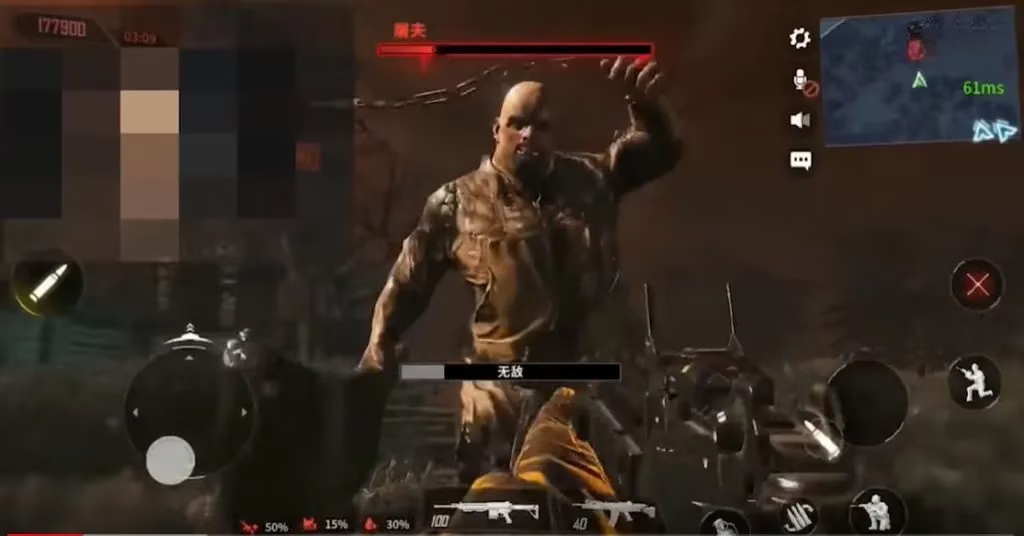
One of the biggest questions was whether the test server would mess up main account progress. The answer was no. Because it was a separate test environment, anything players did there did not affect their regular Call of Duty Mobile profile. That made it safer to experiment without worrying about rank, loadouts, or stats. Players could enjoy the undead chaos without consequences.
There was also a regional catch. Garena Call of Duty Mobile was available only in certain countries, so players outside those areas had to use a VPN to run the game properly. VPNs were not exactly a rare tool among mobile gamers, but they added an extra step. Many players asked which one to use, and at the time, UFO VPN was a common recommendation because it offered premium server access for a short period just by watching ads. This was useful for players who did not want to pay for a subscription just to try a test server.
The key requirements and steps looked something like this:
| Requirement / Step | Detail |
|---|---|
| Platform | Android only for the test server |
| Limit | First 20,000 registrations |
| Account impact | No effect on main game progress |
| Region workaround | VPN recommended outside Garena regions |
| Key action | Claim rewards from the in-game mailbox |
What made the event memorable? It was not only the mode itself but also the sense of urgency. A limited registration window, an Android-only restriction, and the need to follow a multi-step guide created a kind of scavenger-hunt energy. Players shared tips, screenshots, and first impressions across social media. Those who got in became unofficial guides, helping others avoid common mistakes like forgetting to claim mailbox rewards or not connecting through the right VPN region.
Was the hype justified? Based on how zombie mode eventually became one of the most requested returning features in Call of Duty Mobile, the answer seems clear. The Garena test server proved that undead survival could work on smaller screens with touch controls. It also showed that players were willing to download APKs, use VPNs, and follow step-by-step instructions just for an early taste. That kind of dedication is not common for every mobile update.
For anyone looking back at this moment, the key takeaways are straightforward. Limited test servers can generate huge interest, but clear steps and regional workarounds matter. Players should always check whether a test build affects main progress, and they should be ready to move fast when slots are limited. In this case, the first 20,000 Android players who followed the guide got a head start on one of the most talked-about modes in Call of Duty Mobile history.
Industry analysis is available through Game Developer, and it helps contextualize why COD Mobile’s Garena Zombies test server worked so well as a hype engine: limited-capacity builds, platform constraints (Android-only), and “do-this-in-order” onboarding (APK install, then mailbox rewards) are classic live-ops tactics that turn a mode preview into an event. Seen through a development lens, separating progress from the main account reduces perceived risk and encourages experimentation, while community-driven troubleshooting (VPN regions, missed mailbox claims) effectively becomes free QA feedback—exactly the kind of high-signal iteration cycle that can accelerate a feature’s eventual polish and wider rollout.
Comments