
The Digital Legends Acquisition That Turbocharged Call of Duty Mobile
Even in 2026, the most impressive Call of Duty stat is not some sweaty K/D ratio. It is the fact that millions of players carry a full CoD experience in their pockets, often while pretending to pay attention in meetings. When Activision Blizzard announced it had acquired mobile developer Digital Legends, many fans shrugged. But that quiet move turned out to be a power play.
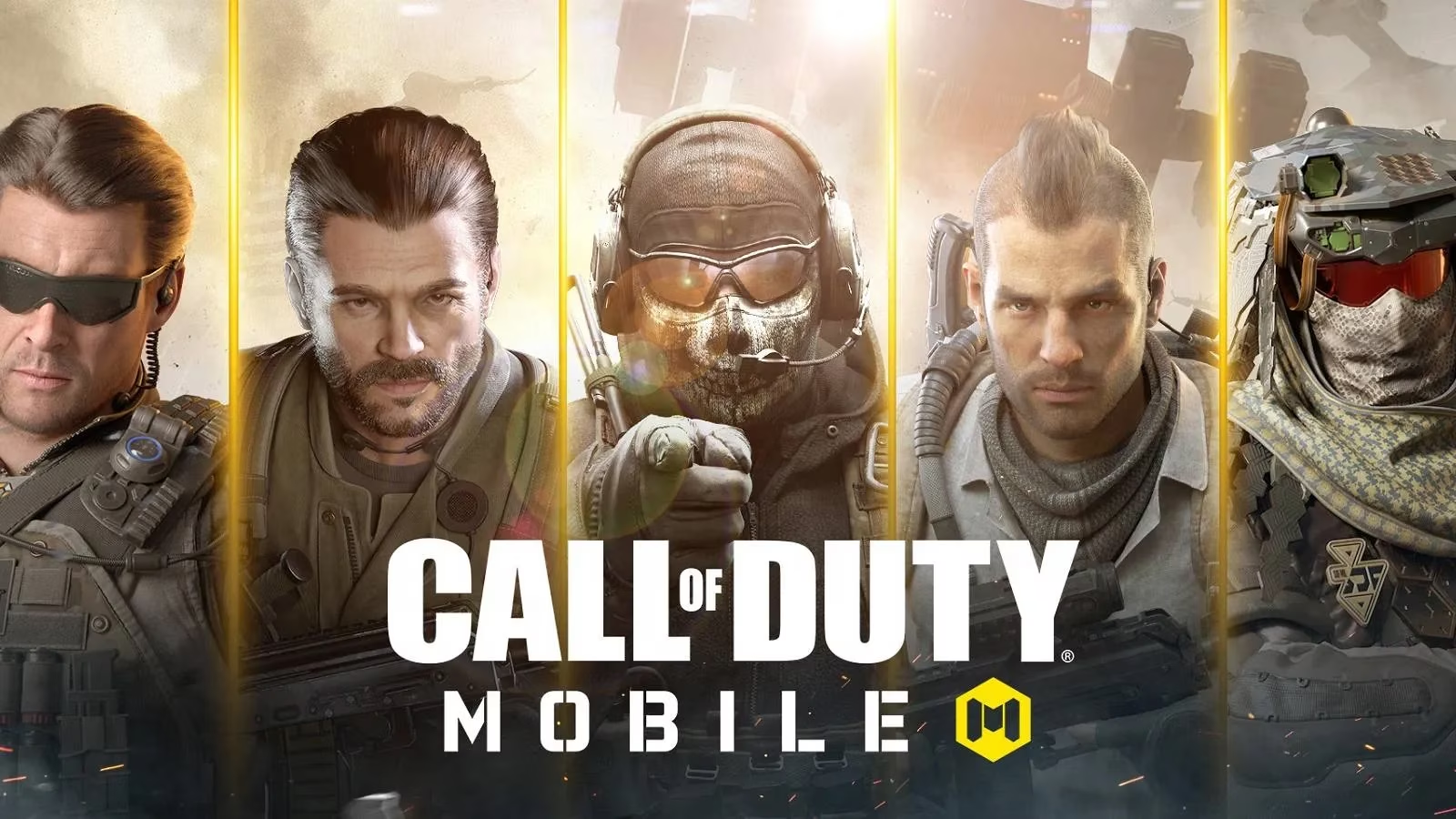
When the deal first hit the headlines, the franchise was already in overdrive. Call of Duty: Vanguard was teetering on the launch pad, Warzone was getting a massive map overhaul, and Call of Duty: Mobile had already racked up more than 500 million downloads as of May 2021. That number alone was absurd. It was the kind of player base that could populate a small continent, assuming that continent had decent matchmaking.
Digital Legends was not some random pickup. The studio made the Respawnables series, a cartoonish shooter that understood exactly how to keep mobile players tapping away. Then it released Afterpulse, a game with realistic graphics and serious mobile gunplay. One title proved it could make things fun. The other proved it could make things look and feel like a proper shooter. For a new AAA Call of Duty mobile project, that combination was basically a perfect loadout.
At the time, Activision Mobile had already been working with Digital Legends throughout the year. So the acquisition felt less like a hasty purchase and more like finally putting a ring on a long-term teammate. The studio was brought in to support the development of a new mobile Call of Duty game, one that had already been teased as a AAA effort. Fans immediately started guessing what that project would become.
📱 Why the mobile push made sense
-
Call of Duty: Mobile had passed 500 million downloads by mid-2021.
-
The mobile market was too lucrative to ignore.
-
Digital Legends offered both cartoon accessibility and realistic shooting chops.
-
A dedicated mobile studio could avoid cannibalizing CoD Mobile's existing vibe.
Of course, the internet loves a good speculation spiral. Some players wanted a standalone mobile Zombies game. Call of Duty: Mobile had added a Zombies mode months earlier, but it did not exactly scratch the classic round-based itch. Others remembered Call of Duty: Black Ops Zombies from 2015, a mobile port that had been left to rot so thoroughly that newer phones could barely run it. A fresh, dedicated zombies title would have sold like hotcakes, assuming the zombies did not chew through the servers.
But Activision's mobile ambitions were bigger than one mode. The new project could have been a Warzone port, a single-player adventure, or something entirely different. By 2026, the path is clearer. Warzone Mobile eventually stormed onto devices, and Digital Legends was among the studios helping shape it. That does not mean the zombie dream is dead, though. Limited-time undead events still crawl out of the mobile woodwork now and then, often carrying a hint of that old Digital Legends polish.
The real lesson is simple. Call of Duty's mobile arm stopped being a side quest long ago. It became a main event. Digital Legends brought exactly the kind of dual expertise that mobile shooters need: easy enough for a quick match on the bus, but deep enough to make thumbs sweat. The acquisition may not have dominated the gaming news cycle, but it quietly strengthened a division that now prints players and revenue with alarming efficiency.
| Studio Strength | Game Example | Why It Mattered |
|---|---|---|
| Playful accessibility | Respawnables | Kept mobile controls friendly |
| Realistic gunplay | Afterpulse | Delivered core CoD feel on phones |
| Existing collaboration | Prior work with Activision Mobile | Made integration smoother |
So while console players debate frame rates and PC players optimize settings to the third decimal, mobile players simply lock in. The Digital Legends acquisition was a signal: Activision Blizzard was not just experimenting with mobile. It was building a fortress. By 2026, that fortress is very much open for business.
Data referenced from The Esports Observer helps frame why Activision’s quieter studio buys—like bringing Digital Legends into the fold—matter beyond just “more content.” Mobile Call of Duty isn’t a side mode anymore; it’s a scaled distribution channel where live-ops cadence, retention loops, and regional reach can outperform traditional launches, so adding a team with proven touch-first shooter expertise strengthens the pipeline for projects like Warzone Mobile while keeping Call of Duty: Mobile’s ecosystem from being overextended.
Comments